


No matter how dope you think your Scion looks after slamming it and plopping on those 19-inch rollers, you'll still get spanked by your momma's Caravan! I mean come on, you know you are in trouble when your motor only puts down 97 hp TO-THE-WHEELS! It's kind of like having one of those chromed out, lowrider bikes with the 100-spoke Daytons; they look fat, the honeys jock them, but try riding one all the way to the Kwik-e-Mart!
So what you need to do is take a break from installing that 5,000 pound stereo with a gazillion subs and television screens, look under the dash, pull that little lever that says "hood", and start working on the motor. Stereos are cool, but horsepower is infinitely cooler.
The import scene wouldn't be what it is today if all of the cars were slow, trust me. So what's the first thing that you think about when it comes to bolt-on performance? Turbo… maybe, nitrous… maybe, jet-engine… probably not, exhaust… definitely.
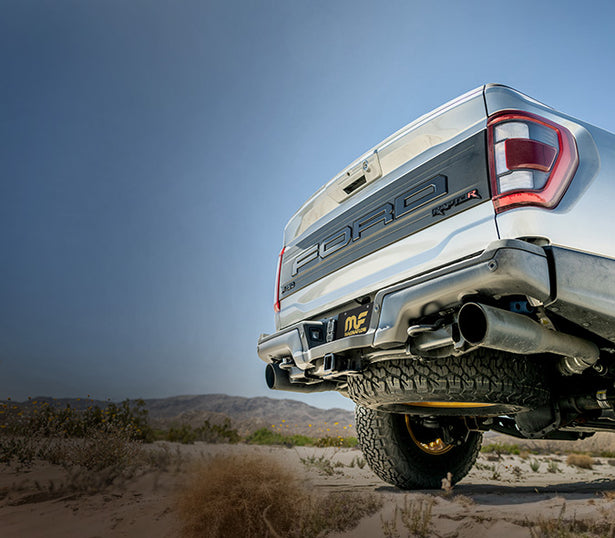
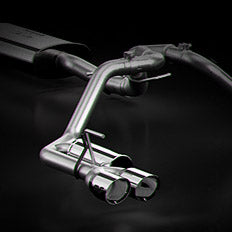
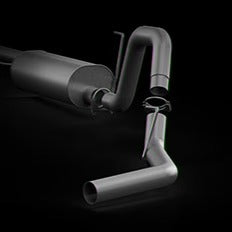
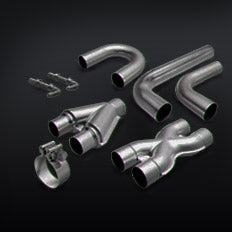
Exhaust is a popular first upgrade due to the fact that they are relatively affordable, look tight, sound great, and nine times out of 10 give you a bump up in power. It just so happened that Magnaflow offers a 2.25-inch mandrel bent stainless steel cat-back exhaust system- with our name on it. There are three major advantages to the Magnaflow exhaust and those are:
1) Stainless Steel Construction - Under extreme exhaust heat and other weather conditions, other metals will break down and deteriorate into rust and eventual exhaust leaks will result in a loss of power. Stainless steel is designed to withstand the punishment of exhaust temperatures and is sure to last you a lifetime.
2) Mandrel Bends - Increased exhaust flow is the key to unleashing performance in terms of a muffler setup. The faster the burned gasses are expelled from the pipes, the faster the next cylinder can combust. When exhaust pipes are bent to fit the car, they diminish in diameter at their bends just as if you were to take a straw and curve it, the straw will kink. The smaller diameter piping in the bends reduces exhaust flow tremendously. Mandrel bending ensures that even through the bends and turns of the pipe, it will still remain the same diameter throughout.
3) Increase in Piping Diameter - On naturally aspirated cars, the diameter of the pipe makes a big difference, and on turbo charged cars it makes a huge difference. The Scion's factory piping is 2.00 inch in diameter, and the Magnaflow is 2.25 inches. The bigger the tube the faster the gasses can escape into the atmosphere. Simple, right? Sweet!
So now that you know how the benefits of the exhaust system, let's put one in and hopefully get this Scion into the three-digit horsepower bracket, damn! The installation of Magnaflow's exhaust system literally takes about one hour, but allow yourself about two just to make sure that you have everything perfect. Make sure that you read through this entire article before you even get started so that you know exactly what tools you will need. Enjoy!
|

1) Jack up the car using either a lift or a jack and then back it up with some safety jack stands to be positively sure that you are safe beneath the car. Be smart, don't try to remove the exhaust five minutes after you raced around the streets for an hour. Things get hot you know. Give it a good 30 minutes to cool down. Unplug the battery as well so that the computer can reset and accept the new MagnaFlow exhaust. |
|

2) Locate the tie brace along the underside of the exhaust channel. Using a 12mm socket, loosen only one side of the brace and swing it to the side so that you can remove the piping.
|

3) Locate the oxygen sensor located after the catalytic converter. Carefully measure 4 inches behind the sensor and mark it with a pen or scratch it with a tool. Take note of the picture and the direction of the vehicle so that you don't make a stupid mistake and cut off the wrong side.
|

4) Using a saw or other metal pipe cutting device, circumcise your pipe at the 4-inch marking that you made - ouch! Nobody said performance wasn't going to be painful.
|

5) From the exhaust tip, follow your way up the piping until you reach the first pipe clamp and remove it using the 12mm socket.
|

6) In order to remove the muffler section, you will need to pry the exhaust out of its rubber hanger/snub. Start with the hanger that is closest to the tail of the car and then proceed forward. It is going to be snug so spray some soapy water or other lubricant on the rubber and wiggle it out.
|

7) After removing the exhaust from its hangers, you can now completely remove the factory exhaust unit by pulling it and wiggling it back and forth. "Ya got to wiggle it… just a little bit." Okay so maybe that song is way before your time, but it's a classic.
|

8) Now that the muffler section is gone, you must remove the resonator assembly, or in my words, "the pipe in between the cat and the muffler." Here is a picture of the hanger removal tool that you probably don't have. So just like before, spray some lube on the rubber and pull it free.
|

9) Side-by-Side, you can see the difference in piping diameter. The larger, 2 1/4 -inch, mandrel-bent stainless steel tubing, MagnaFlow setup is sure to expel the gasses with ease, and free up a few horsies while doing so.
|

10) Let's go back to when we cut our piping with the saw. We want to be sure to file down any metal shavings or burrs that might pose a rough edge.
|

11) Time to put in the new stuff! Match up the new resonator assembly hangers to their designated factory rubber snubs. Connect the new resonator inlet pipe to the exit of the catalytic converter using the 2.00-inch clamp where you originally cut. The clamp bolts require a 9/16 -inch socket. After getting a snug fit, adjust the clamp around the pipe. Do not tighten any of the clamps just yet! Remove any packaging plastic so that it doesn't melt. Don't ask why some of these pics still have the plastic on them!
|

12) In order to get the new muffler assembly back on, you are going to have to remove the cable mounting bracket. Using a 10mm socket, remove this bracket and push it over to the side.
|

13) Mount the new muffler assembly to the car by connecting the hangers to their rubber snubs starting with the one that is closest to the tailpipe. Once the muffler is secure you can align the muffler assembly to the resonator assembly.
|

14) Using the 2.25 -inch clamp, connect the two pipes and loosely, and tighten them using a 9/16 -inch socket. With this in place you can go ahead and reattach the cable mounting bracket with the 10mm socket.
|

15) Don't get all pissy if the muffler tip doesn't line up perfectly as it exits the rear lip. All that you have to do in order to line up the tip is to move the pipes back and forth at their clamping joints unit it fits. This is why we didn't tighten the clamps all of the way. When you get it just right, tighten down those clamps.
|

She looks sweet, huh? Not only is she pretty, but she purrs nicely, and bumps up the power, too. Check out the dyno specs.
|

Click Here To View Larger Image
Can you say 102.2 hp baby? That's 5 wheel horsepower and 2 pounds of torque with a simple hour of your time. Not to mention that it looks and sounds gangsta! Now that we have taken care of the exhaust side of it, our next step has to be an intake. Stay tuned for our intake install. See Ya. |
|